The register
Patterns: The Designs on the Film
The designs are a small American tradition: a state on the shaft, printed on the same film every other docket measures.
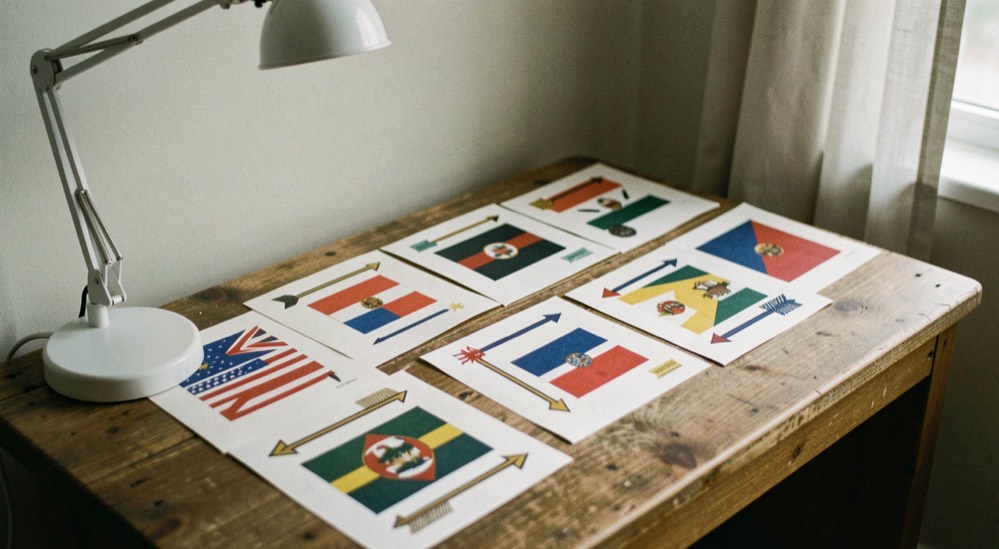
The design is the last layer on the film and the first thing a reader sees. The register reads it last because everything the design sits on has already been read: the gauge it is printed on, the rectangle it is printed to, and the seam that crosses it. This docket reads what the archive holds, and the archive here is unusually good.
What the catalogue held, and how the desk knows
Forty nine product addresses of the shop that traded on this domain are on the record. Their codes carry the two letter abbreviations of thirty one states, in a single repeated scheme: the state, then classic or standard, then a color word where a variant existed. Four addresses carry opaque identifiers that the captures resolve to the same scheme. Beside the state line, the same catalogue held a geometric line and a custom wrap, and the description repeated on every sheet read: twelve printed and cut wraps, 2 mil vinyl, air release adhesive.
That is the whole of what the record states, and the desk keeps to it. The catalogue offered no gauge options and no length options, so the forty nine sheets were one film cut to one template, and any division of them by thickness or by length would be an invention rather than a reading. Editorial standards is the page that decides such questions, and it decides them against the invention.
The state line
Thirty one of the fifty states, printed on a band two fingers wide, is the largest family in the catalogue and the most local marking in archery. The register reads it as a printing problem before a decoration: a flag is a field and survives a cut almost anywhere, a seal concentrates its detail and forbids the seam from crossing it, and the difference between the two decides where the cut falls and how much overlap the pattern can carry. The state design tradition reads the record, the reason a state is a natural design for a shaft, and what a seal asks of a film.
The hex line, and the colorways
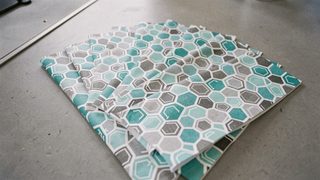
Beside the flags sat a line that names no place: a hexagonal figure repeated across the band, printed in single colors, with plain color wraps beside it. A hexagon repeats without a direction, so it tiles the rectangle from any corner and hides its own seam, which makes it the forgiving end of the range and the cleanest place to compare film behavior without a design getting in the way. The hex line and colorways reads the codes, the shades they name, and what a colorway changes beyond color.
What a design costs the film
Every design in the catalogue was printed on the same 2 mil vinyl, so the differences between them are differences of ink and cut, not of film. The film underneath, and how to tell the two routes of manufacture apart at a bench, is read in cast against calendered vinyl; the rectangle the design has to live inside, and how much of the tube it can cover, is in shaft coverage.
What the desk does not have is a single sheet of any of it. The designs are read from an archive of captures, and where a shade or a detail was never captured, the register says the record is silent rather than filling it in. The rows of the spec table carry that honesty into the numbers.
In this docket
The pages of this docket, newest first.
-

Patterns
A State on the Shaft: Where the Designs Come From
The state design is the most American thing on an arrow wrap. The desk reads it as a printing problem before a decoration.
-
Patterns
Hexagons and Colorways: The Line Without a State
Not every wrap names a state. The hexagonal line runs beside the flags, and its colorways test what the print can hold.
-

Patterns
Marks That Matter: How Shooting Sports Identify a Projectile
A projectile in a scored sport has to be somebody's, and has to be legal. The mark that proves the first and the rulebook that proves the second are the same machinery.
-

Patterns
Outfitting a School Archery Season: Wraps, Colors and Lost Arrows
A school program owns fifty arrows and lends them out a hundred times a season. The wrap is how the equipment stays the school's and the scores stay the archer's.
-

Patterns
Shooting for a Crown: Target Traditions at European Festivals
Somewhere between the score and the spectacle sits the festival shot: the competition that is also a ritual, with a crown at the top of the pole.
-

Patterns
Reading a Name: What a Pattern Called Something Promises
A name on a product is a compressed spec: a promise of a known thing in a known group. Reading the name properly is a skill, and it transfers between trades whole.
-

Patterns
The Small Press of a Design Tradition
A design tradition is not kept by the catalogues that sell it; it is kept by the small presses, the local scenes and the people who print the same figure because it means something.
-

Patterns
Keeping a Hobby Object Playable for Years
What a home arcade keeps, labels and returns to, and what a wrap desk stores in a box for the next season, with sources and limits.
-