Patterns
Shooting for a Crown: Target Traditions at European Festivals
Somewhere between the score and the spectacle sits the festival shot: the competition that is also a ritual, with a crown at the top of the pole.
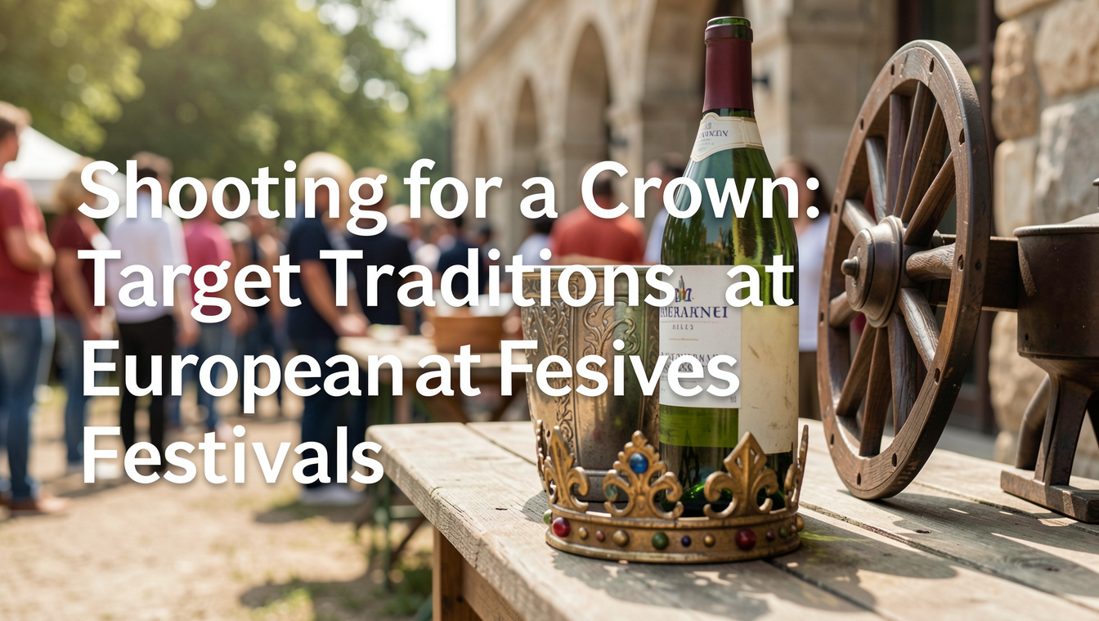
Archery and crossbow sport have a second history running beside the scored one: the festival shot, where the competition is a ritual and the prize is a title. The register's own subject, the marked projectile, appears there too, because a festival shot still has to be somebody's, and the tradition of marking arrows at a festival is as old as the festival.
What is the Vogelschießen, and how does the king shot work?
The Vogelschießen is the bird shooting of the German festival tradition: a carved wooden bird mounted on a pole, and the shooters take turns at it until the bird comes down. The archer who brings it down is the festival king for a year, which is a real title with real duties and a real place in the parade the next season. The bird is the target and the crown is the prize, and the shot that wins it is the one ritual shot of the year that the whole town watches.
The festival that keeps the tradition at Olpe is documented, rite by rite, by Vogelschießen in Olpe at Festwiese: the bird on the pole, the order of shooters, and what the title is worth for the year. The tradition's deeper ground, the history underneath the ritual, is the kind the World History Encyclopedia reads at much greater age.
How is the shooting order at a festival decided?
By seniority and by lot, depending on the festival, which is the part the tradition shares with every scored sport: the order matters, and it is set by a rule rather than by who arrives first. The king shoots last or first by local custom, the officers take their places by rank, and the order is part of the record the festival keeps.
The machinery of the order is the same machinery the register reads at a smaller scale in any scored event: a written sequence, a named official, a result that is the same in everyone's book. The difference at a festival is that the result is also a coronation.
What does the title of festival king mean for a whole year?
More than a sash. The king presides at the next festival, leads the parade, and carries the office's duties until the next bird falls. The title is the reason the shot matters: the festival is a competition where the prize is a year of obligation, which is a very old idea of what a prize is for.
What the festival keeps that a score cannot
A chronicle, which is the festival's version of a record: the names of the kings, the years the bird fell early and the years it held, the order the officers took. A scored event keeps numbers; a festival keeps a story with dates in it, and the story is the reason the town still shoots at a wooden bird a century after the prize stopped being practical.
The register keeps its own smaller version of the chronicle: each article dated, each figure dated, and the gaps in the record admitted in the rows that would have held them. A tradition and a register run on the same fuel, which is a kept record rather than a good memory.
| Element | Scored event | Festival shot |
|---|---|---|
| The target | A face of rings | A wooden bird on a pole |
| The order | A published running order | Seniority or lot, by local custom |
| The prize | A score and a placing | A title, and a year of duties |
| The record | The book of the day | The festival chronicle |
Where the wrap meets the tradition
In the mark, as it does everywhere. A festival arrow is still an identified arrow, and the club colors on a band of film are the same identification the painted cresting carried. The marked projectile is the subject of marks that matter, and the tradition of design it descends from is the state design tradition.
What the festival contributes to the register's subject is the proof that the mark was always part of the sport's public life: the arrow that brings down the bird is the arrow everybody saw, in the colors everybody knows, and the band that identifies it is the band that makes the result stick. A crown won on an unmarked arrow would be a crown argued over, and the tradition, which has had centuries to think about it, never made that mistake.
That is what the festival is, underneath the bunting: a scored event that kept its ritual and its record at the same time, and a reminder that the register's subject was public before it was ever commercial.
The desk files the festival under the same heading as the rulebook: the mark on the projectile, read by the crowd this time instead of the official, and just as binding for that.