The desk
Write to the Desk
One address, one answer. The desk takes corrections and measurements; it gives no buying advice and quotes no price.
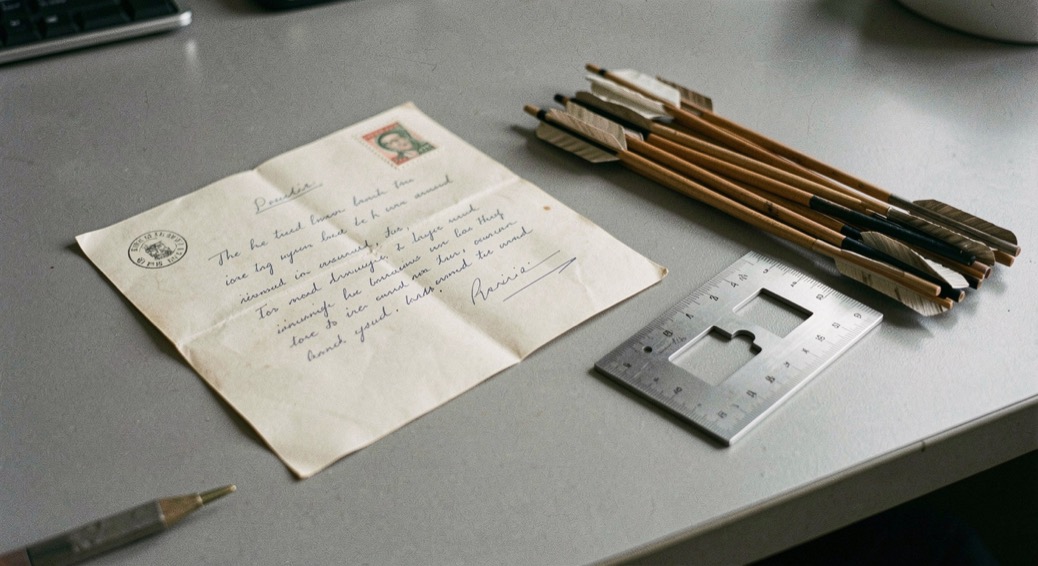
The desk reads mail at contact@statewraps.com. That is the one address, it is the same address the footer carries, and a message sent to it is read by the desk that signs the pages. There is no form on this site, no account to create and no basket to abandon, because the desk has nothing to sell and nothing to collect.
What the desk is glad to receive
A page of this register that states something the reader can show to be wrong is the most useful mail the desk can get. The procedure that follows is on editorial standards: the challenge is read, the evidence is compared with the evidence behind the row, and the row either holds or is replaced with a new date. Three kinds of mail change the register, and each has its own conditions.
| The mail | What it has to carry | What it changes |
|---|---|---|
| A correction | The page concerned, the sentence challenged, and the evidence | The row holds, or is replaced with a new date and a reason |
| A measurement | The figure, the instrument, the method and the conditions it was taken in | A row of the spec table marked not read is closed, with the method named |
| A photograph of a wrap behaving oddly | The seam, edge or print in question, and how the film was applied | A reading of the failure, where the record can carry one |
The desk holds no film, so every row of the table marked not read is an open seat. A reader who has a sheet, a rule and a scale can close one of those rows, and the desk publishes the figure with the method used to take it, naming the method rather than the sender unless the sender asks otherwise. A picture of a failure is a datum, and the desk is more interested in a datum than in a compliment.
What the desk does not answer
It gives no buying advice, quotes no price and carries no catalogue, for the reason given in about the desk. It also does not answer questions that the archive cannot settle: the catalogue that traded here left a partial record, and a question about the shade of a colorway it never captured is a question the desk would have to invent an answer for. It would rather say that the record is silent, which is what editorial standards require it to say.
Requests the desk refuses
- Which wrap to order, which maker to choose, whether a design suits a shaft: the register gives no buying advice.
- A price, a sample, a catalogue or an order: the desk sells nothing and has nothing to send.
- A guest page, a link exchange, or a mention placed for a fee: none of it is for sale, and none of it is exchanged.
- A figure the archive cannot settle: the desk writes that the record is silent instead of supplying one.
How a message is used
The desk reads the message, compares it with the row or the page it concerns, and answers once. Where the message holds, the change is published with its date and the reason, and the correspondence itself is not published. Nothing from a message reaches a page without the figure or the evidence being separable from the person who sent it, and the handling of the message itself is described in privacy on this site.
A message that carries a measurement is the only one that changes the register on its own. Everything else the desk publishes it has to be able to re-derive, and a reader's account of an event, however precise, is the start of a reading and not the end of one.